วันอังคารที่ 23 กุมภาพันธ์ พ.ศ. 2553

Journal 10 Piano


The piano is a musical instrument which is played by means of a keyboard. Widely used in Classical music for solo performances, ensemble use, chamber music, and accompaniment, the piano is also very popular as an aid to composing and rehearsal. Although not portable and often expensive, the piano's versatility and ubiquity have made it one of the world's most familiar musical instruments.

Pressing a key on the piano's keyboard causes a felt covered hammer to strike steel strings. The hammers rebound, allowing the strings to continue vibrating at their resonant frequency.[1] These vibrations are transmitted through a bridge to a sounding board that couples the acoustic energy to the air so that it can be heard as sound. When the key is released, a damper stops the string's vibration. See the article on Piano key frequencies for a picture of the piano keyboard and the location of middle-C. Pianos are percussive. According to the Hornbostel-Sachs method of music classification, they are grouped with chordophones.

The word piano is a shortened form of the word pianoforte, which is derived from the original Italian name for the instrument, clavicembalo [or gravicembalo] col piano e forte (literally harpsichord with soft and loud). This refers to the instrument's responsiveness to keyboard touch, which allows the pianist to produce notes at different dynamic levels by controlling the speed with which the hammers hit the strings.

Journal 9 Diamond


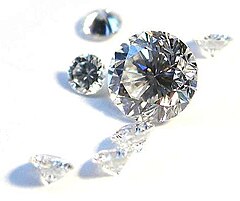
The name diamond is derived from the ancient Greek. Diamonds are thought to have been first recognized and mined in India, where significant alluvial deposits of the stone could be found many centuries ago along the rivers Penner, Krishna and Godavari. Diamonds have been known in India for at least 3,000 years but most likely 6,000 years.
Diamonds have been treasured as gemstones since their use as religious icons in ancient India. Their usage in engraving tools also dates to early human history.The popularity of diamonds has risen since the 19th century because of increased supply, improved cutting and polishing techniques, growth in the world economy, and innovative and successful advertising campaigns.


In 1772, Antoine Lavoisier used a lens to concentrate the rays of the sun on a diamond in an atmosphere of oxygen, and showed that the only product of the combustion was carbon dioxide, proving that diamond is composed of carbon. Later in 1797, Smithson Tennant repeated and expanded that experiment. By demonstrating that burning diamond and graphite (charcoal) releases the same amount of gas he established the chemical equivalence of these substances.

The most familiar use of diamonds today is as gemstones used for adornment, a use which dates back into antiquity. The dispersion of white light into spectral colors is the primary gemological characteristic of gem diamonds. In the 20th century, experts in gemology have developed methods of grading diamonds and other gemstones based on the characteristics most important to their value as a gem. Four characteristics, known informally as the four Cs, are now commonly used as the basic descriptors of diamonds: these are carat, cut, color, and clarity.A large, flawless diamond is known as a paragon.

Journal 8 Perfume


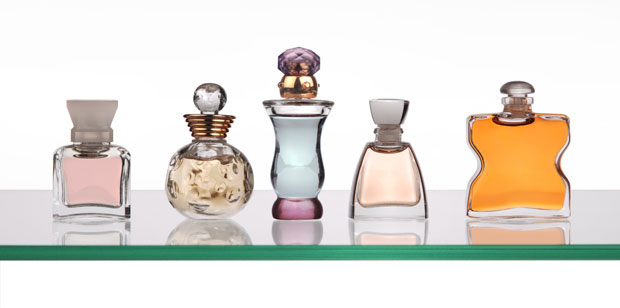
Perfume types reflect the concentration of aromatic compounds in a solvent, which in fine fragrance is typically ethanol or a mix of water and ethanol. Various sources differ considerably in the definitions of perfume types. The concentration by percent/volume of perfume oil is as follows:

Perfume extract (Extrait): 15-40% (IFRA: typical 20%) aromatic compounds
Eau de Parfum (EdP), Parfum de Toilette (PdT): 10-20% (typical ~15%) aromatic compounds. Sometimes listed as "eau de perfume" or "millésime".
Eau de Toilette (EdT): 5-15% (typical ~10%) aromatic compounds
Eau de Cologne (EdC): Chypre citrus type perfumes with 3-8% (typical ~5%) aromatic compounds
Splash and After shave: 1-3% aromatic compounds
Perfume oils are often diluted with a solvent, though this is not always the case, and its necessity is disputed. By far the most common solvent for perfume oil dilution is ethanol or a mixture of ethanol and water. Perfume oil can also be diluted by means of neutral-smelling oils such as fractionated coconut oil, or liquid waxes such as jojoba oil.

The intensity and longevity of a perfume is based on the concentration, intensity and longevity of the aromatic compounds (natural essential oils / perfume oils) used: As the percentage of aromatic compounds increases, so does the intensity and longevity of the scent created. Different perfumeries or perfume houses assign different amounts of oils to each of their perfumes. Therefore, although the oil concentration of a perfume in Eau de Parfum (EdP) dilution will necessarily be higher than the same perfume in Eau de Toilette (EdT) from within the same range, the actual amounts can vary between perfume houses. An EdT from one house may be stronger than an EdP from another.


Men's fragrances are rarely sold as EdP or perfume extracts. As well, women's fragrances are rarely sold in EdC concentrations. Although this gender specific naming trend is common for assigning fragrance concentrations, it does not directly have anything to do with whether a fragrance was intended for men or women.

Furthermore, some fragrances with the same product name but having a different concentration name may not only differ in their dilutions, but actually use different perfume oil mixtures altogether. For instance, in order to make the EdT version of a fragrance brighter and fresher than its EdP, the EdT oil may be "tweaked" to contain slightly more top notes or fewer base notes. In some cases, words such as "extrême", "intense" or "concentrée", that might indicate aromatic concentration are sometimes completely different fragrances that relates only because of a similar perfume accord. An example of this would be Chanel‘s Pour Monsieur and Pour Monsieur Concentrée.

Eau de Cologne (EdC) since 1706 in Cologne, Germany is originally a specific fragrance and trademark. However outside of Germany the term has become generic for Chypre citrus perfumes (without base-notes).

Journal 7 Mauritius Island


Mauritius is an island nation off the coast of the African continent in the southwest Indian Ocean, about 900 kilometres (560 mi) east of Madagascar. In addition to the island of Mauritius, the Republic includes the islands of Cargados Carajos, Rodrigues and the Agalega Islands. Mauritius is part of the Mascarene Islands, with the French island of Réunion 200 km (120 mi) to the southwest and the island of Rodrigues 570 km (350 mi) to the northeast.

Uninhabited until the 17th century, the island was ruled first by the Dutch and then the French after the Dutch had abandoned it. The British took control during the Napoleonic Wars and Mauritius became independent from the UK in 1968. Mauritius is a parliamentary republic and is member of the Southern African Development Community, the African Union and the Commonwealth of Nations.


The main languages spoken in Mauritius are Mauritian Creole, French and English. English is the only official language but the lingua franca is Creole and the newspapers and television programmes are usually in French. Ethnically, the majority of the population is Indian and there are also many people of African descent on the island and there are also European and Chinese minorities. It is the only African nation where the largest religion is Hinduism although Christianity and Islam also have significant populations.

The island of Mauritius is renowned for having been the only known home of the dodo. First sighted by Europeans around 1600 on Mauritius, the dodo became extinct less than eighty years later.

Journal 7 Rose


A rose is a perennial flower shrub or vine of the genus Rosa, within the family Rosaceae, that contains over 100 species and comes in a variety of colours. The species form a group of erect shrubs, and climbing or trailing plants, with stems that are often armed with sharp prickles. Most are native to Asia, with smaller numbers of species native to Europe, North America, and northwest Africa. Natives, cultivars and hybrids are all widely grown for their beauty and fragrance.

The leaves are alternate and pinnately compound, with sharply toothed oval-shaped leaflets. The plant's fleshy edible fruit, which ripens in the late summer through autumn, is called a rose hip. Rose plants range in size from compact, miniature roses, to climbers that can reach 7 meters in height. Species from different parts of the world easily hybridize, which has given rise to the many types of garden roses.


The name rose comes from French, itself from Latin, rosa, which was borrowed from Oscan, from Greek rhodion (Aeolic wrodion), from Old Persian wurdi "flower" (cf. Avest. warda, Sogdian ward, Parthian wâr).

Attar of rose is the steam-extracted essential oil from rose flowers that has been used in perfumes for centuries. Rose water, made from the rose oil, is widely used in Asian and Middle Eastern cuisine. The French are known for their rose syrup, most commonly made from an extract of rose petals. In the United States, this French rose syrup is used to make rose scones and marshmallows.

Rose hips are occasionally made into jam, jelly, and marmalade, or are brewed for tea, primarily for their high Vitamin C content. They are also pressed and filtered to make rose hip syrup. Rose hips are also used to produce Rose hip seed oil, which is used in skin products and some makeup products.

Journal 6 Chocolate


Chocolate comprises a number of raw and processed foods produced from the seed of the tropical Theobroma cacao tree. Cacao has been cultivated for at least three millennia in Mexico, Central and South America, with its earliest documented use around 1100 BC. The majority of the Mesoamerican peoples made chocolate beverages, including the Aztecs, who made it into a beverage known as xocolātl, a Nahuatl word meaning "bitter water". The seeds of the cacao tree have an intense bitter taste, and must be fermented to develop the flavor.

After fermentation, the beans are dried, cleaned, and roasted, and the shell is removed to produce cacao nibs. The nibs are then ground to cocoa mass, pure chocolate in rough form. Because this cocoa mass usually is liquefied then molded with or without other ingredients, it is called chocolate liquor. The liquor also may be processed into two components: cocoa solids and cocoa butter. Unsweetened baking chocolate (bitter chocolate) contains primarily cocoa solids and cocoa butter in varying proportions. Much of the chocolate consumed today is in the form of sweet chocolate, combining cocoa solids, cocoa butter or other fat, and sugar. Milk chocolate is sweet chocolate that additionally contains milk powder or condensed milk. White chocolate contains cocoa butter, sugar, and milk but no cocoa solids
Cocoa solids contain alkaloids such as theobromine and phenethylamine, which have physiological effects on the body. It has been linked to serotonin levels in the brain. Some research found that chocolate, eaten in moderation, can lower blood pressure.[1] Dark chocolate has recently been promoted for its health benefits, including a substantial amount of antioxidants that reduce the formation of free radicals, although current scientific evidence is against health improvements by dietary antioxidants.[citation needed][dubious – discuss] The presence of theobromine renders it toxic to some animals, especially dogs and cats.


Chocolate has become one of the most popular food types and flavors in the world. Gifts of chocolate molded into different shapes have become traditional on certain holidays: chocolate bunnies and eggs are popular on Easter, chocolate coins on Hanukkah, Santa Claus and other holiday symbols on Christmas, and hearts on Valentine's Day. Chocolate is also used in cold and hot beverages, to produce chocolate milk and hot chocolate. The world's top producer of cacao beans is Africa, where recent controversy has focused on the use of child labor in cocoa production.

Journal 5 The Lord of the Rings


The Lord of the Rings is an epic high fantasy novel written by philologist and Oxford University professor J. R. R. Tolkien. The story began as a sequel to Tolkien's earlier, less complex children's fantasy novel The Hobbit (1937), but eventually developed into a much larger work. It was written in stages between 1937 and 1949, much of it during World War II. Although generally known to readers as a trilogy, the work was initially intended by Tolkien to be one volume of a two-volume set along with The Silmarillion; however, the publisher decided to omit the second volume and instead published The Lord of the Rings in 1954-55 as three books rather than one, for economic reasons. It has since been reprinted numerous times and translated into many languages, becoming one of the most popular and influential works in 20th-century literature.

The title of the book refers to the story's main antagonist, the Dark Lord Sauron, who had in an earlier age created the One Ring to rule the other Rings of Power, as the ultimate weapon in his campaign to conquer and rule all of Middle-earth. From quiet beginnings in the Shire, a hobbit land not unlike the English countryside, the story ranges across Middle-earth following the course of the War of the Ring through the eyes of its characters, most notably the hobbits, Frodo Baggins, Samwise Gamgee (Sam), Meriadoc Brandybuck (Merry) and Peregrin Took (Pippin).

Along with some of Tolkien's other works, The Lord of the Rings has been subjected to extensive analysis of its themes and origins. Although a major work in itself, the story was only the last movement of a larger work Tolkien had worked on since 1917, in a process he described as mythopoeia. Influences on this earlier work, and on the story of The Lord of the Rings, include philology, mythology, religion and the author's distaste for the effects of industrialization, as well as earlier fantasy works and Tolkien's experiences in World War. The Lord of the Rings in its turn is considered to have had a great effect on modern fantasy; the impact of Tolkien's works is such that the use of the words "Tolkienian" and "Tolkienesque" has been recorded in the Oxford English Dictionary.

The enduring popularity of The Lord of the Rings has led to numerous references in popular culture, the founding of many societies by fans of Tolkien's works, and the publication of many books about Tolkien and his works. The Lord of the Rings has inspired, and continues to inspire, artwork, music, films and television, video games, and subsequent literature. Award-winning adaptations of The Lord of the Rings have been made for radio, theatre, and film.